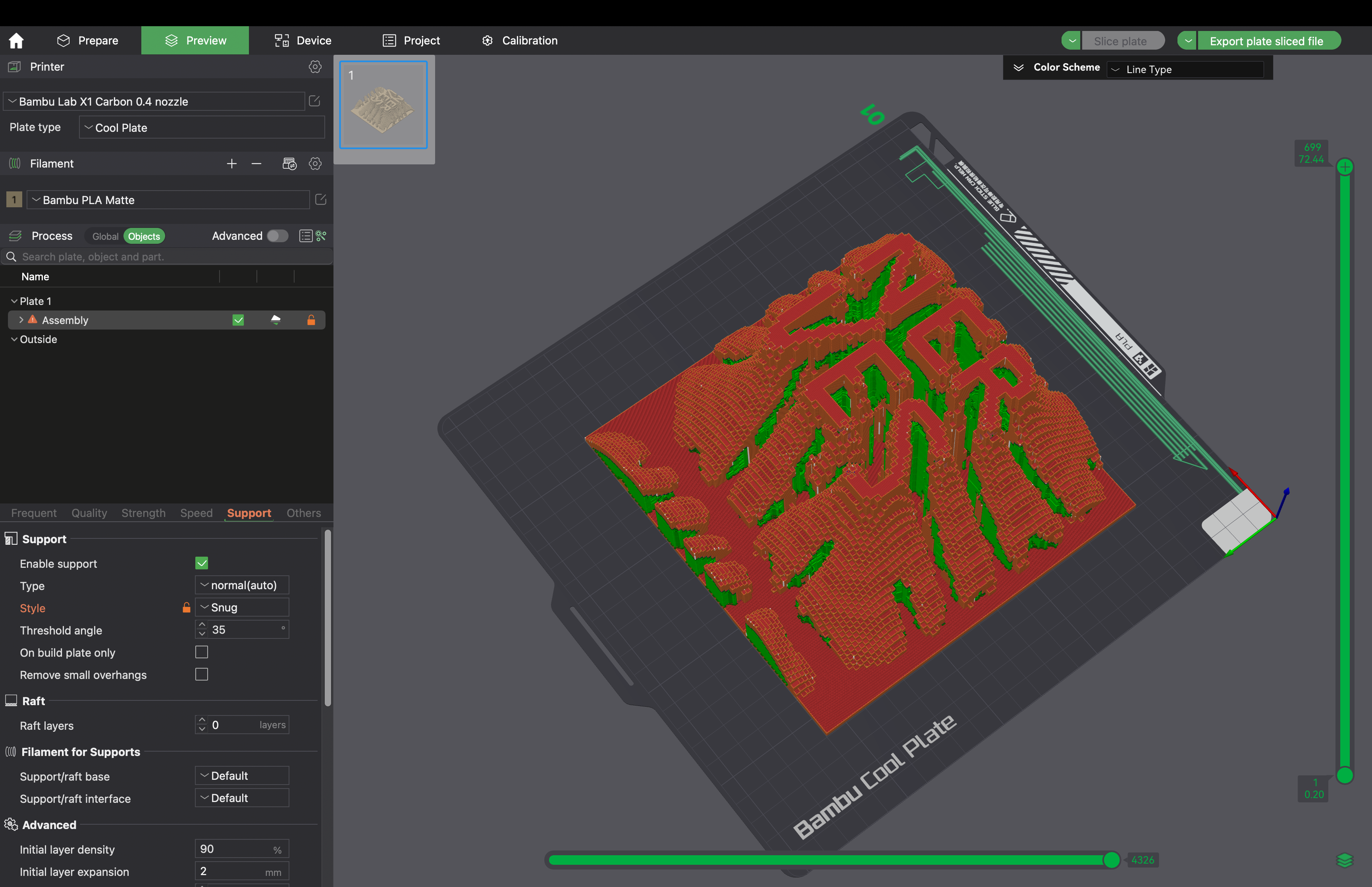
A 3D chronophotograph of a chemical system frozen in time as fluids mix, based on Alexander Turing's fanastic Reaction Diffusion system.
This piece is part of an investigation of how the organic is transformed when shuttled between the virtual world and the real one.
Created as part of DMA 113 - W26 at UCLA with Prof. Casey Reas.
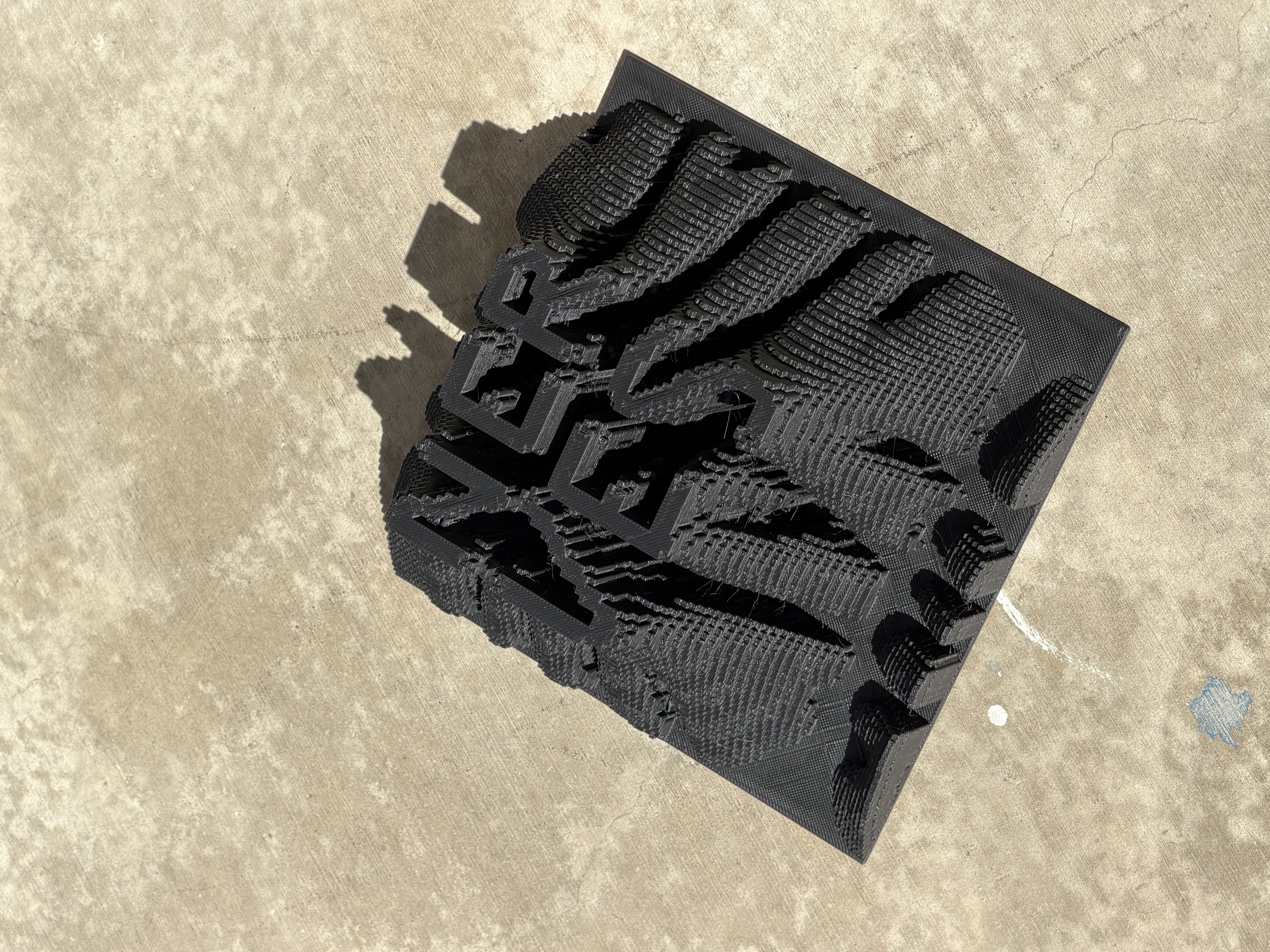
This is a physical rendering of a cellular automata mimicking a reaction-diffusion algorithm. The automata is seeded with a 'chemical map' which is a simple 2D drawing tool that exports a bitmap, which the reaction-diffusion script decodes and uses as a map of the position of the initial concentrations of one of the chemicals. In this case, the bitmap spells out the word 'Nerves.' After the simulation begins, the first thousand generations are stacked, one below the previous, each forming a layer of the final object.
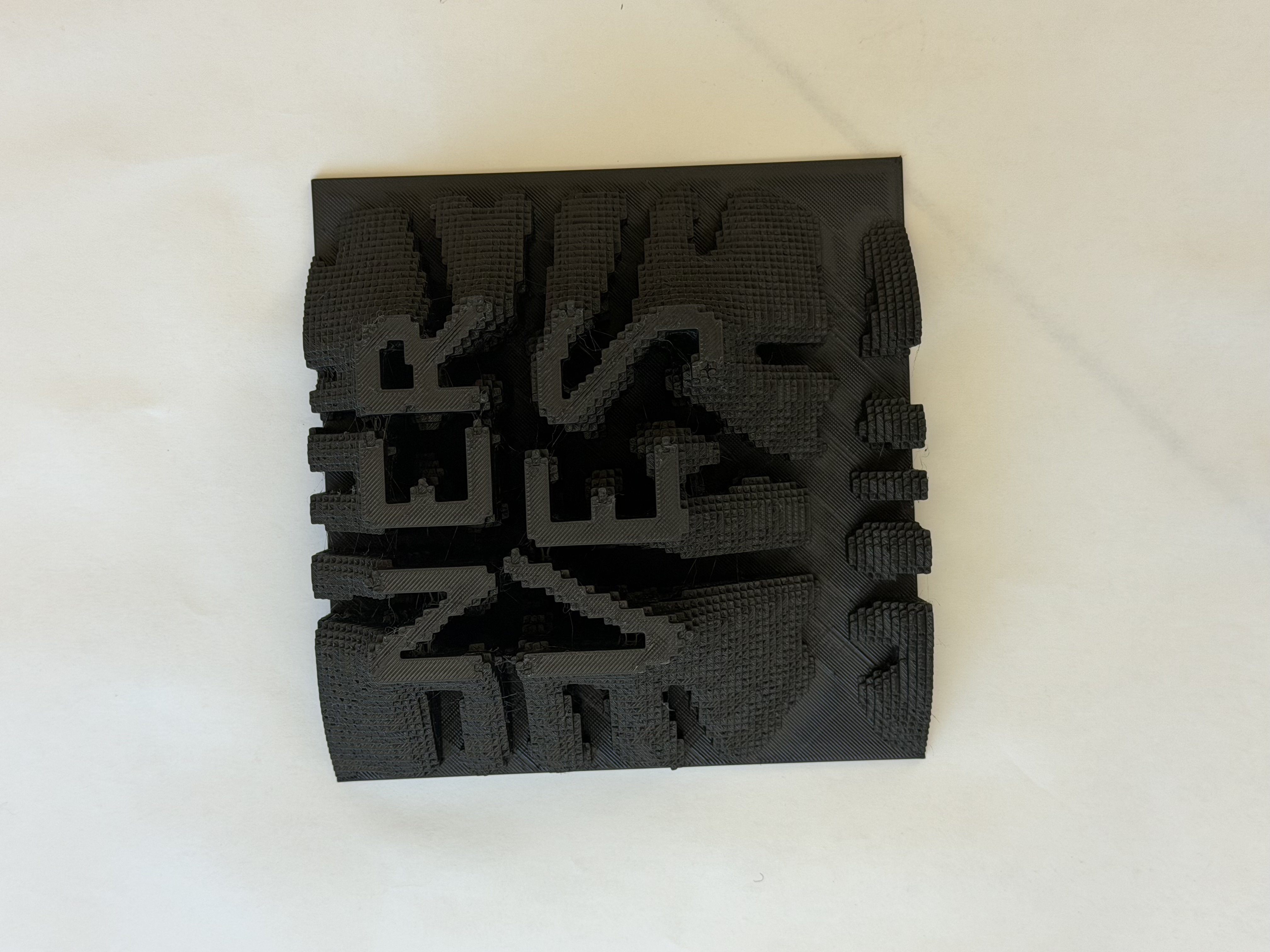
The results from the simulation are converted into a list of points. That data forms the basis of a 3D model which, with some post-processing, is imported into standard 3D slicer software and sent off to a printer.
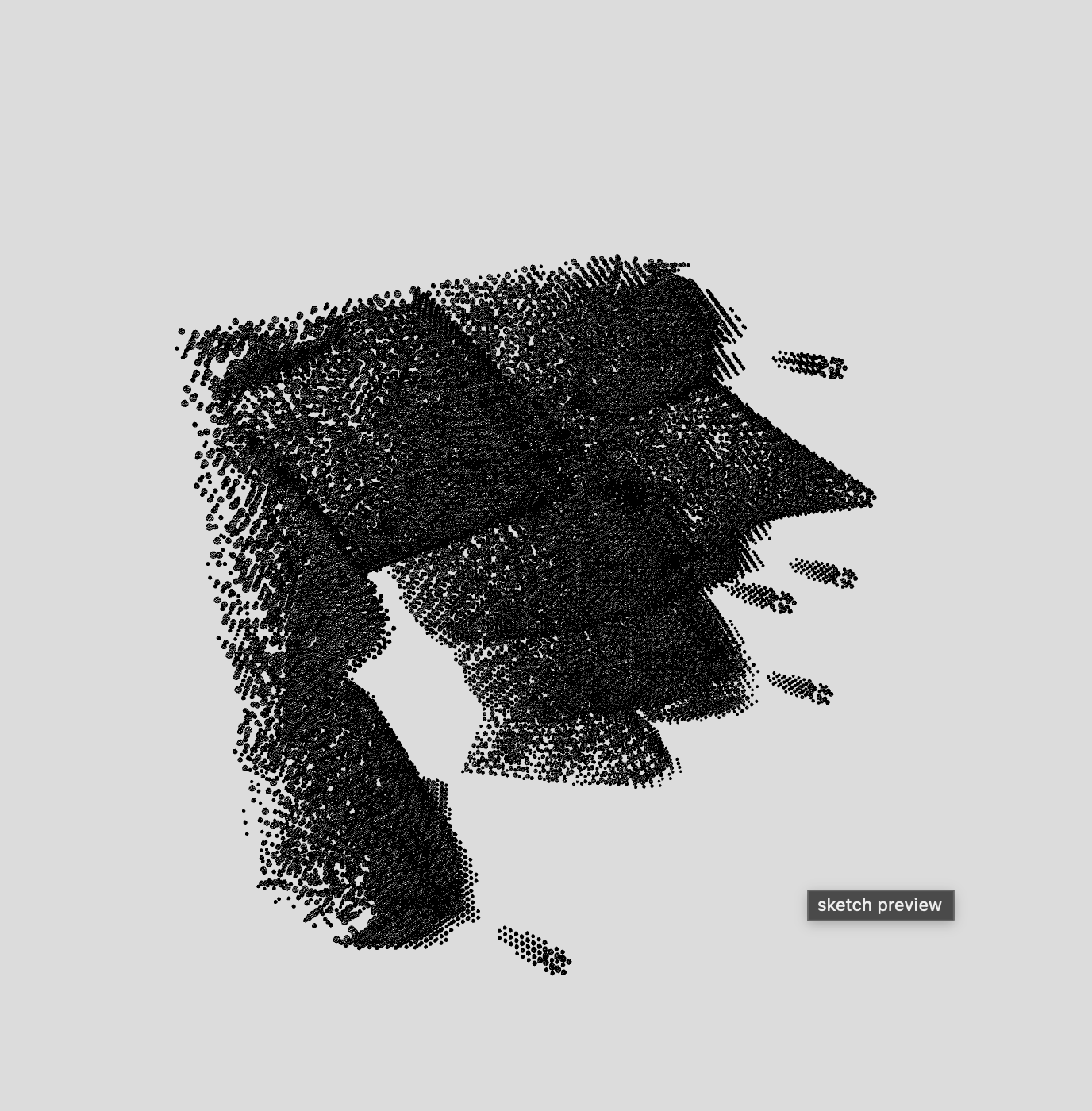
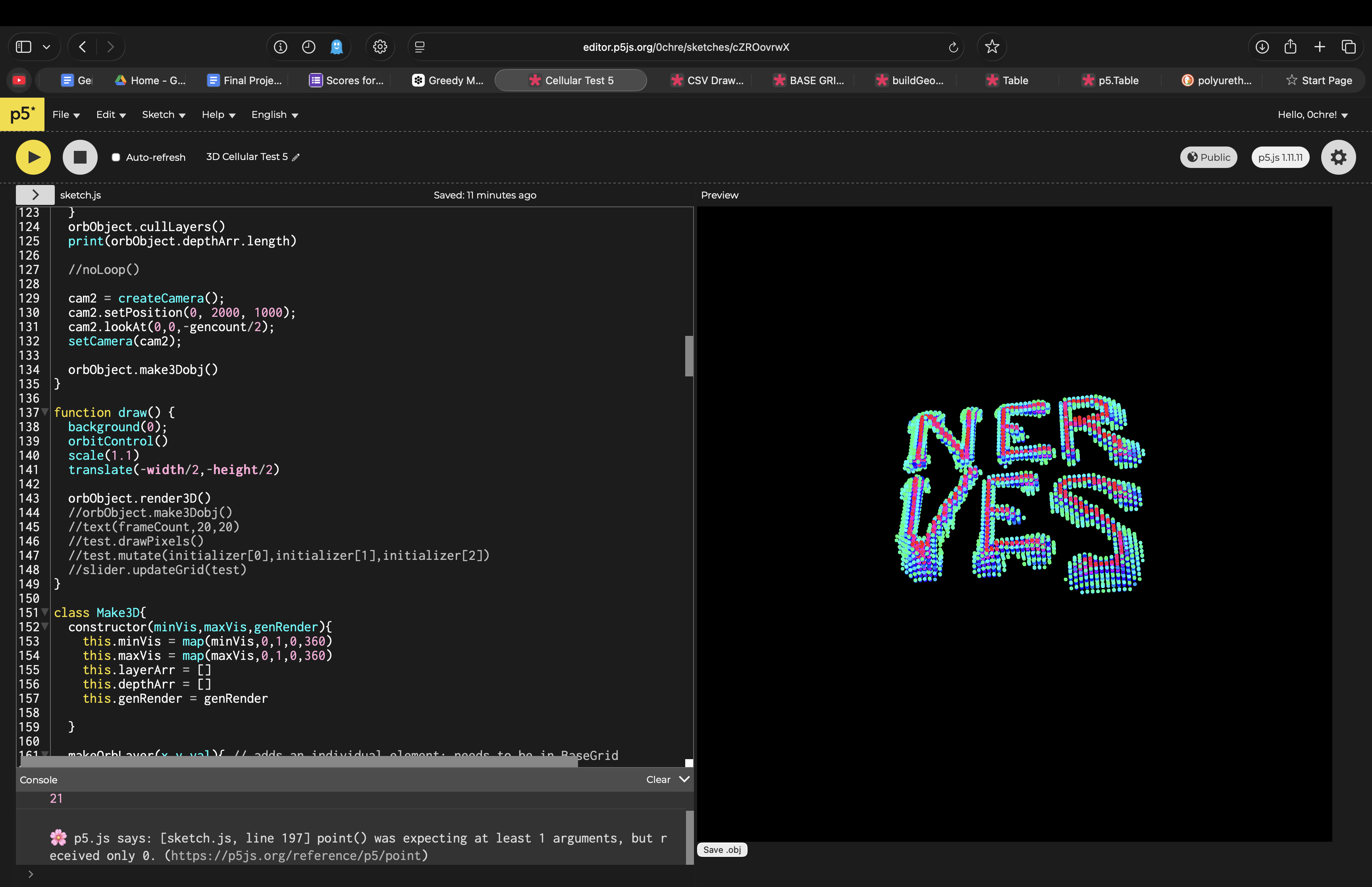
Here are some failed early tests of the generation software's 3D output using WEBGL and p5.js
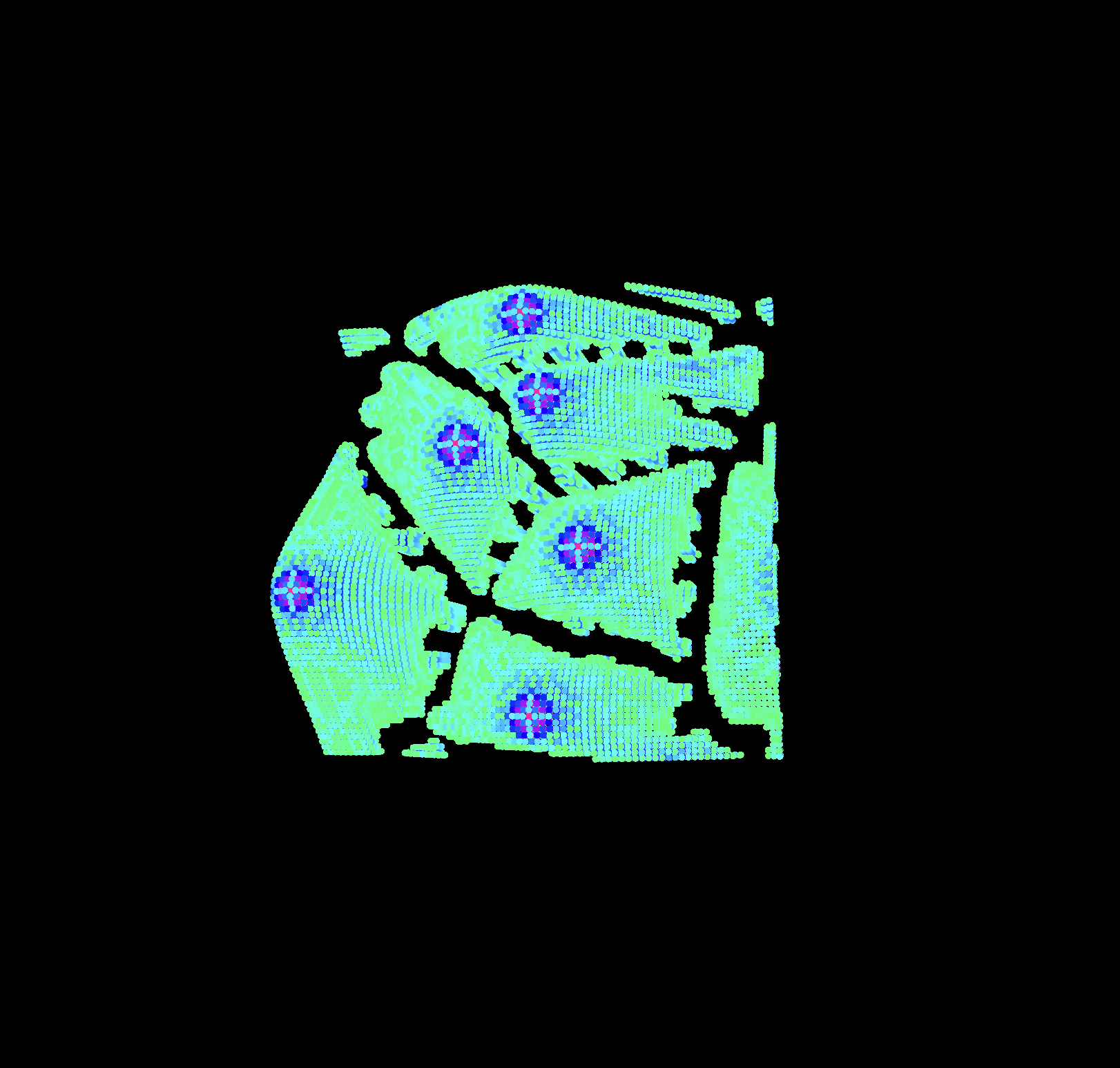
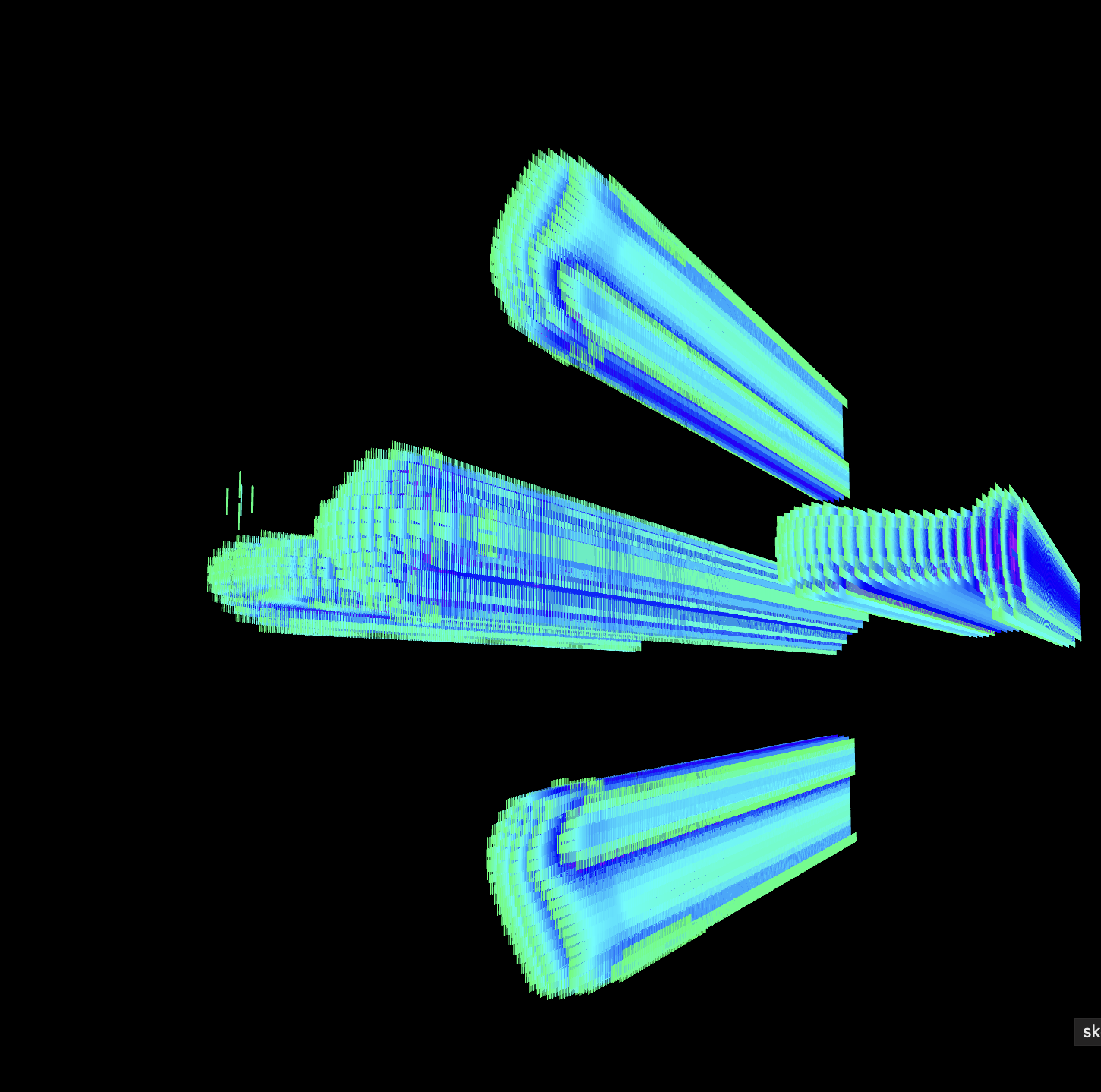
The image on the left is the slicer software I used (BambuStudio) to turn the .obj output from my p5 script on the right into a 3D-printable file